When Will Humanoid Robots Replace Cleaners? A 2025-2040 Reality Check
Tesla Optimus, Figure AI, and the real impact of humanoid robots on cleaning services. Moravec's Paradox, workforce predictions, and strategic roadmap for cleaning companies.
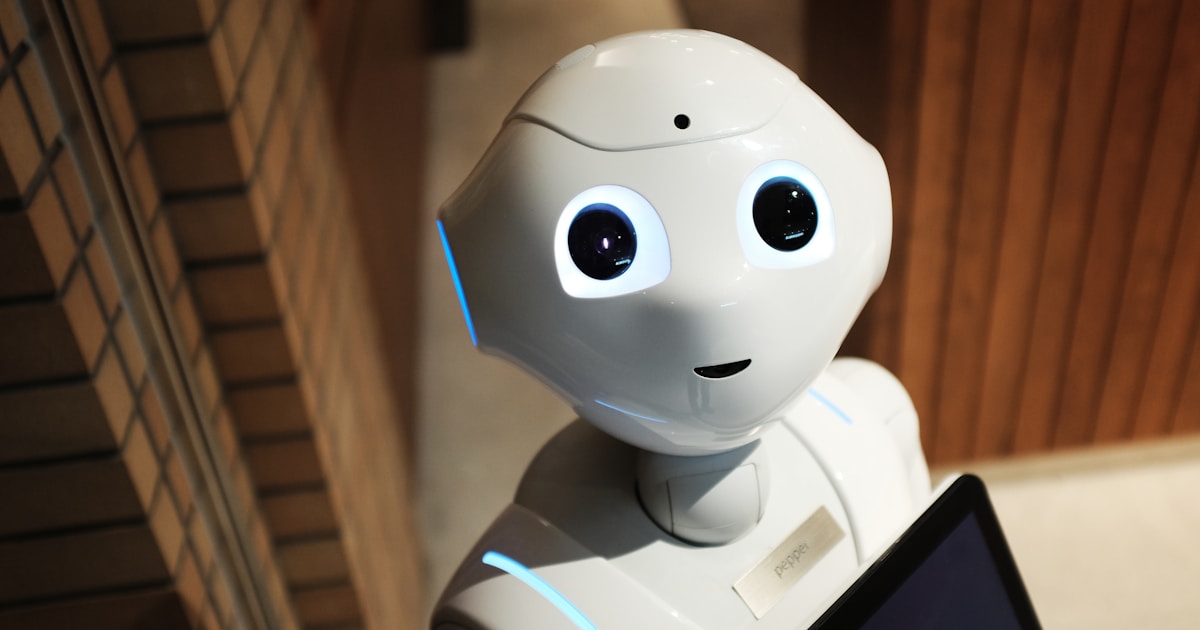
"Cleaners, police officers, and handymen will be the last jobs to be automated." You've probably heard this from robotics experts. But what do the facts actually say?
In 2024, humanoid robot investments exceeded $2.5 billion. Tesla Optimus, Figure AI, and 1X NEO dominate headlines. But there's a massive gap between viral demo videos and real-world performance.
In this article, we set aside investor presentations and marketing materials to provide an objective analysis based on concrete data, actual pilot programs, and scientific research.
Moravec's Paradox: Why "Easy" Jobs Are Actually the Hardest#
In 1988, robotics researcher Hans Moravec at Carnegie Mellon University made a surprising observation:
"It is comparatively easy to make computers exhibit adult level performance on intelligence tests or playing checkers, and difficult or impossible to give them the skills of a one-year-old when it comes to perception and mobility."
This phenomenon, known as Moravec's Paradox, is one of the fundamental truths of AI and robotics:
| For Humans | For Robots |
|---|---|
| Playing chess → HARD | Playing chess → EASY (solved 1997) |
| Face recognition → EASY | Face recognition → HARD (solved 2010s) |
| Folding laundry → EASY | Folding laundry → VERY HARD (still unsolved) |
| Writing legal briefs → HARD | Writing legal briefs → EASY (solved 2023) |
The Evolutionary Explanation
Why is this the case? The answer lies in evolution:
- Sensorimotor skills (walking, grasping, seeing): 500 million years of evolutionary optimization
- Abstract thinking (math, chess, writing): Only 10,000 years of cultural development
According to Epoch AI's 2024 analysis, sensorimotor tasks require 10^15 - 10^18 FLOPS/second. Meanwhile, models like GPT-4 use only 10^11 - 10^13 FLOPS for reasoning tasks. This "Moravec Gap" represents several orders of magnitude difference.
What This Means for Cleaning
Cleaning sits right in the middle of Moravec's Paradox:
The "easy-looking" parts of cleaning that are hard for robots:
- Recognizing different surfaces (wood, carpet, glass, marble) by touch
- Reaching under and between furniture
- Moving fragile objects without breaking them
- Spotting stains and selecting appropriate cleaning agents
- Maneuvering in tight corners
- Handling unexpected situations (toys, pets, spills)
In the words of UC Berkeley roboticist Ken Goldberg:
"Plumbers, electricians, and handymen are very safe from automation for many years. They require high dexterity and adaptation to variable real-world conditions."
The Real State of Humanoid Robots: 2025#
Major Players and Actual Performance
| Robot | Company | Price | Real Status (2025) |
|---|---|---|---|
| Optimus Gen 3 | Tesla | ~$20,000 (target) | Factory pilots; no home use |
| Figure 02 | Figure AI | $30K-$250K | BMW testing; completed 20-hour shift |
| NEO Gamma | 1X Technologies | ~$30,000 | Home deliveries started (limited) |
| Digit | Agility Robotics | ~$60,000 | Active in Amazon warehouses |
| Walker S2 | UBTECH | $65K-$75K | Working in Chinese factories |
| XMAN-R1 | Keenon | Unknown | Pilot at Shangri-La Hotel |
| Zerith H1 | Zerith | Unknown | Hotel bathroom cleaning pilot |
Reality vs Marketing
Figure 02 example:
- ✅ Completed 20-hour continuous shift at BMW
- ✅ Can perform sheet metal insertion
- ❌ Error rates not publicly disclosed
- ❌ Duration of unsupervised operation unknown
Tesla Optimus example:
- ✅ Laundry folding demo shown
- ✅ Walking and basic manipulation
- ❌ Most videos filmed in controlled environments
- ❌ TIME magazine: "Still needs human intervention to start cycles and recover from errors like dropped items"
1X NEO example:
- ✅ Home deliveries started
- ❌ Robot Dexterity analysis: Struggled to remove hand from watering can handle
- ❌ Could not complete shirt folding
- ❌ Many tasks performed via teleoperation (remote human control)
The Dexterity Problem
From Brian Potter's "Robot Dexterity Still Seems Hard" analysis at Construction Physics, a 21-task dexterity test:
Tasks robots CANNOT do in 2025:
- Make a PB&J from unopened bread bag and jars
- Shuffle and deal poker cards
- Crack an egg cleanly
- Button a shirt
- Tie shoelaces
- Open and apply a bandaid
- Organize tangled cables
- Pick up a coin from the floor
These are all things a 2-year-old can do. This is Moravec's Paradox in action.
Economic Realities of the Cleaning Industry#
Market Size
Global cleaning services market:
- 2024: $424 billion
- 2025: $451 billion
- 2032: $734 billion (projected)
- CAGR: 7.19%
U.S. cleaning sector:
- 2.4 million+ janitors and cleaners
- 900,000+ residential cleaning workers
- Average annual salary: $29,991
The Labor Crisis
The cleaning industry faces a severe workforce shortage:
- 67% of hotels experience staffing shortages
- 72% of hotels cannot fill open positions
- In the UK, 21% of cleaning workforce is foreign-born (60% in London)
- 29% of positions classified as "hard to fill"
Building Service Contractors Association International:
"In 2025, 34% of cleaning contractors anticipate significantly higher sales compared to the previous year—but labor shortages are constraining their growth."
Automation Economics
Cost analysis of cleaning automation:
| Factor | Human Worker | Robot |
|---|---|---|
| Hourly cost | $15-25 (+ benefits) | $2-5 (amortized) |
| Working hours/day | 8 hours | 6-8 hours (incl. charging) |
| Absenteeism | 5-15% | 0% (except breakdowns) |
| Turnover cost | High | None |
| Initial investment | Low | $20,000-60,000 |
| Flexibility | High | Low |
| Complex tasks | Can do | Cannot do |
ROI calculation:
- One robot: $25,000
- Annual full-time employee cost: ~$40,000 (salary + benefits)
- Simple math: ROI in 8 months
BUT: This assumes the robot can do as much work as a human. In reality:
- Robots can only do floor cleaning
- Complex tasks still require humans
- Maintenance and technical support costs not included
Real Pilot Programs: 2025#
Hotel Sector
Shangri-La Traders Hotel, Shanghai (October 2025)
- World's first humanoid + specialized robot integration
- XMAN-R1 greets guests in lobby
- C40 handles floor cleaning
- W3 delivers room service
- Result: Humanoid "hired" but complex cleaning still done by humans
Rosie by Tailos
- Deployed in thousands of hotel rooms
- 20% faster at room cleaning
- 80% faster in common areas
- But: Not humanoid—purpose-built cleaning robot
Zerith H1 (China, 2025)
- Designed for hotel bathroom cleaning
- Toilet and sink wiping
- Amenity restocking
- Status: Early pilot, no performance data
Warehouse and Factory
Amazon - Digit (Agility Robotics)
- Box handling and recycling in warehouses
- Target: 10,000 units/year production
- Task: Structured, repetitive work
BMW - Figure 02
- Testing at South Carolina plant
- Sheet metal insertion
- 400% speed improvement (vs. start)
- 7x success rate improvement
- Completed 20-hour continuous shift in May 2025
Mercedes-Benz - Apollo (Apptronik)
- Intralogistics pilot at European plants
- Repetitive, physically demanding tasks
Home Cleaning
1X NEO Gamma
- Home deliveries began 2026
- Grocery unloading
- Laundry folding (limited)
- Reality: Cannot yet perform independent home cleaning
Timeline: What Happens When?#
Expert Predictions Compared
| Source | 2025-2027 | 2028-2032 | 2033-2040 |
|---|---|---|---|
| Morgan Stanley | Pilot programs | Slow adoption | Mid-2030s acceleration |
| Bain & Company | Factory/warehouse | Hotel room cleaning | Broad service sector |
| Goldman Sachs | 50-100K units | 250K+ units (2030) | 1M+ units/year |
| McKinsey | Controlled environments | Semi-structured | Home environments |
Detailed Timeline
2025-2027: Early Adoption
- ✅ Factory and warehouse pilots
- ✅ Simple tasks in structured environments
- ✅ Floor cleaning robots becoming common
- ❌ Humanoid home cleaning not possible
- ❌ Complex manipulation unsolved
Cleaning industry impact: Minimal. Only large commercial spaces (airports, malls) using floor robots.
2028-2032: Acceleration Phase
- ✅ Significant growth in logistics and manufacturing
- ✅ Hotel room preparation (except bed-making)
- ✅ Battery life reaches 6+ hours
- ⚠️ Home cleaning begins (premium segment)
- ❌ Full home cleaning still not available
Bain & Company prediction:
"Within five years, improved dexterity and battery modules will likely support robots' move into semi-structured service settings, where they'll perform tasks such as cleaning and preparing hotel rooms."
Cleaning industry impact: Moderate. Large hotel chains starting humanoid pilots. Commercial cleaning companies seeing 15-25% efficiency gains.
2033-2040: Mainstream Adoption
- ✅ Broad service sector impact
- ✅ Home robots entering affluent households
- ✅ Unit cost drops to $15,000-20,000
- ⚠️ Full home cleaning for specific tasks
- ❌ Handyman, plumber jobs still safe
Goldman Sachs projection:
- 1.4 million units by 2035
- 1 billion+ humanoids by 2050 (Elon Musk's claim)
Cleaning industry impact: High. 20-30% workforce transition in commercial cleaning. Robots common in premium homes for residential cleaning.
Automation Risk by Cleaning Type#
High Risk (2025-2030)
| Cleaning Type | Automation Likelihood | Why? |
|---|---|---|
| Floor sweeping/mopping | ⚫⚫⚫⚫⚫ 95% | Already solved (Roomba, Braava) |
| Large area floor cleaning | ⚫⚫⚫⚫⚫ 90% | Autonomous AMRs widespread |
| Pool cleaning | ⚫⚫⚫⚫⚪ 80% | Structured environment |
| Window cleaning (exterior) | ⚫⚫⚫⚫⚪ 75% | Drones and climbing robots |
Medium Risk (2030-2040)
| Cleaning Type | Automation Likelihood | Why? |
|---|---|---|
| Hotel bathroom cleaning | ⚫⚫⚫⚪⚪ 60% | Pilots like Zerith H1 started |
| Dusting (flat surfaces) | ⚫⚫⚫⚪⚪ 55% | Humanoid arms improving |
| Trash collection/disposal | ⚫⚫⚫⚪⚪ 50% | Basic manipulation |
| Standard office cleaning | ⚫⚫⚪⚪⚪ 45% | Multi-task required |
Low Risk (2040+)
| Cleaning Type | Automation Likelihood | Why? |
|---|---|---|
| Detailed home cleaning | ⚫⚫⚪⚪⚪ 35% | Variable environment, complex |
| Bed-making/sheet changing | ⚫⚫⚪⚪⚪ 30% | Textile manipulation hard |
| Deep kitchen cleaning | ⚫⚪⚪⚪⚪ 25% | Grease, grime, detail work |
| Antique/delicate item cleaning | ⚫⚪⚪⚪⚪ 15% | Expertise + dexterity |
| Exterior specialty cleaning | ⚫⚪⚪⚪⚪ 10% | Variable physical environment |
The "Last Jobs" Theory: Is It True?#
Most Automation-Resistant Professions
Research suggests these job categories will be automated last:
-
Handymen / General Repair
- Why: Every home different, every problem unique
- Moravec score: Very high (physical + problem-solving)
- Prediction: 2045+ (maybe never full automation)
-
Plumbers
- Why: Tight spaces, variable systems, tactile feedback
- Moravec score: Very high
- Prediction: 2045+
-
Electricians
- Why: Safety-critical, variable environment, dexterity
- Moravec score: High
- Prediction: 2040+
-
Cleaners (residential)
- Why: Every home different layout, object variety, decision-making
- Moravec score: Medium-high
- Prediction: Partial 2035+, full 2045+
-
Police / Security
- Why: Social interaction, judgment, ethical decisions
- Moravec score: Low (physical) + Very high (social)
- Prediction: Support roles 2030+, never full automation
Palantir CEO Alex Karp's View (2025)
"AI still struggles with 'unstructured physical chaos.' A domestic plumber or electrician is technically harder to automate than a junior data analyst or visa-dependent administrative assistant."
This represents a reversal of Moravec's Paradox: white-collar jobs are being automated before blue-collar ones.
Strategic Roadmap for Cleaning Companies#
Short-Term (2025-2028)
1. Invest in Floor Robots
- ROI: 12-36 months
- Cost: $5,000-30,000
- Applications: Commercial spaces, warehouses, factories
2. IoT Sensor Integration
- Smart occupancy sensors
- Demand-based cleaning schedules
- Tork Vision Cleaning: 75% complaint reduction, 68% efficiency improvement
3. Employee Training
- Robot maintenance and operation
- Human-robot collaboration
- Focus on complex tasks
Medium-Term (2028-2035)
1. Humanoid Pilot Programs
- Test with hotel and large commercial customers
- Evaluate RaaS (Robot-as-a-Service) models
- Collect ROI data
2. Service Differentiation
- "Premium human cleaning" segment
- Specialized services robots can't do
- Elder care + cleaning integration
3. Workforce Transformation
- Transition programs to technical roles
- Train robot operators
- Management and quality control positions
Long-Term (2035+)
1. Hybrid Workforce Model
- Robot + human teams
- Task-based allocation
- 24/7 operational capacity
2. New Revenue Streams
- Robot rental and management services
- Maintenance and support contracts
- Training and consulting
Prepare for the Future with SaasTech#
As the cleaning industry transforms, operational efficiency is more important than ever.
With SaasTech platform, today you can:
- ✅ Track employee productivity
- ✅ Measure customer satisfaction
- ✅ Generate task-based reports
- ✅ Prepare for automation integration
Cleaning companies that survive the robot era will be those that master data-driven management.
Create Your Demo Now and prepare for the future.
Conclusion: No Panic, Just Preparation#
Key takeaways:
- Humanoid robots are real - but not ready for home cleaning yet (2025)
- Moravec's Paradox - "easy" jobs will actually be automated last
- Timeline: Commercial cleaning impact 2028+, residential 2035+
- Not complete replacement - hybrid models more likely
- Labor crisis - robots are inevitable solution, not just threat
The cleaning industry will undergo radical transformation over the next 10-15 years. But for prepared companies, this transformation is an opportunity, not a threat.
Final word: Elon Musk predicts 1 billion humanoids by 2040. Morgan Stanley says "slow adoption until mid-2030s." Reality will likely fall somewhere in between—and those who prepare will win.
This article was compiled by the SaasTech Research Team using data from Bain & Company, Morgan Stanley, Goldman Sachs, Epoch AI, McKinsey, and industry reports. Last updated: January 2026
Related Articles
Route Management: How Smarter Routing Saves Time and Fuel Cost
Stop coordinating pickups over the phone. Let the system handle it — routes planned, drivers briefed, staff on time.

Zone-Based Transportation Fees: Stop Losing Money on Every Distant Job
Automatically charge the right travel fee based on where the job is — so fuel costs never catch you off guard again, and no order ever leaves your margin in the red.

Area-Based Day Assignment: Stop Planning Your Week from Scratch Every Monday
Assign specific days to specific service areas and let your operation run itself. Reduce planning time, optimize routes, and give your team a fixed weekly rhythm.